Skip to content
Definition
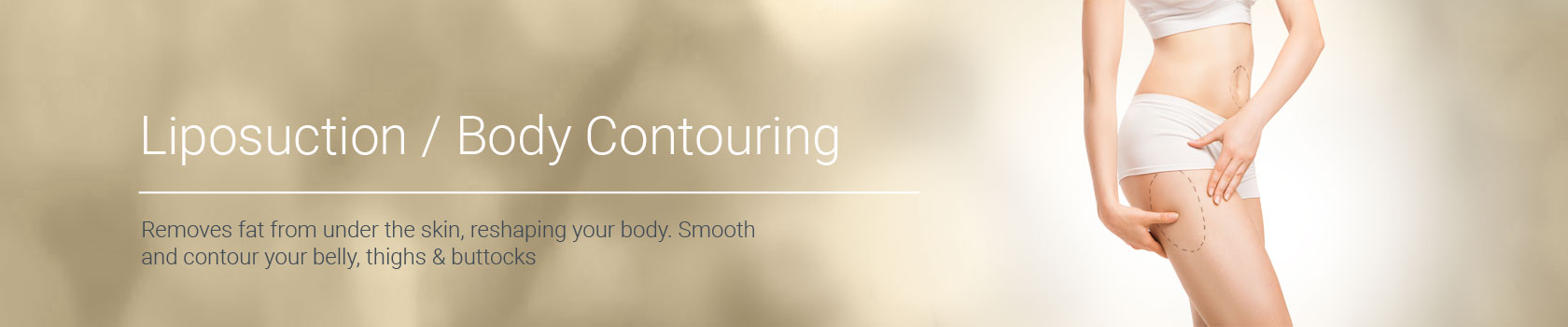
Body contouring procedures fall into primarily two categories: excision or liposuction . The goals are to remove excess or unwanted fat and skin, as well as to reposition and tighten lax tissues. Excisional techniques are named based on anatomic location: abdominoplasty (tummy tuck), mastopexy (breast lift), thigh lift, buttock lift, brachioplasty (arm lift), etc. Liposuction involves the aspiration of fatty deposits from specific locations through small incisions.
Body Contouring Outcomes based on Quality of Skin
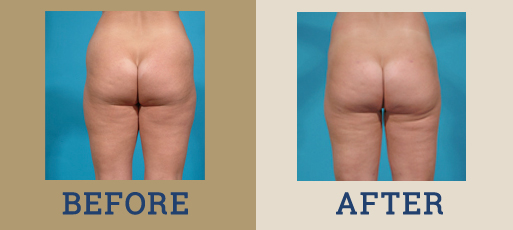
Ultimately the shaping that occurs through surgery, be it liposuction or excision, is largely affected by the quality of the overlying skin. Thigh lifts, buttock lifts, breast lifts/reduction, and arm lifts are not as frequently performed on Asian patients as Caucasians because there is less of a problem with skin laxity. What is the difference, and how can you tell? Skin has natural elastic properties, but if stressed beyond a threshold (too much stretch), the skin does not recoil or assumes its previous contour. This is seen with stretch marks on the abdomen or breasts, typically after pregnancy. Cellulite is the cobblestone appearance on the skin, usually in the thigh area. Cellulite is a unique feature of lipodystrophy (or fatty deposits) that shows uneven skin texture; this also indicates loss of skin elasticity. This is a very difficult problem to treat.
Body contouring surgery is just that – the shaping of the body by removing excess skin and fat. These procedures should NOT be viewed as weight loss alternatives. Liposuction should NEVER be viewed as a way to lose weight. Liposuction and tummy tucks are not substitutes for a good diet and exercise, rather they are supplemental techniques that can help get rid of resistant areas of fat and skin to provide a beautiful body contour. Dr. Ha will counsel you on optimal diet and exercise programs for pre-surgical preparation and post-surgical maintenance.
Candidates for Excision versus liposuction
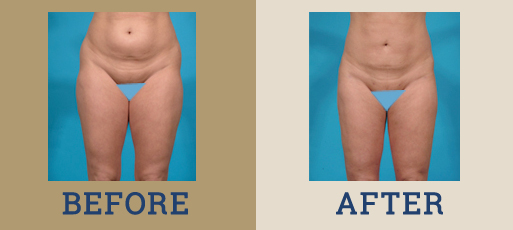
The decision for excision versus liposuction is based upon whether there is primarily skin excess, fat excess, or both. In general, if there is significant skin laxity (i.e. stretch marks or overhanging tummy), excision will be required. Fat removal only by liposuction results in poor cosmetic outcomes because the excess skin does not redrape appropriately – you end up having more sagging of skin and a worse appearance. If there is good quality skin and small amounts of fat, this is a good scenario for liposuction, because the skin will ultimately recontour to the underlying shape.
Post-Partum Abdominoplasty
For most women who are post-partum, there is usually excess skin, stretched from the enlarging fetus. The deeper muscle layer of the abdominal wall also stretches and thins. A tummy tuck not only involves the excision of this excess skin and fat, but also the tightening of the muscle layer to restore a flatter abdominal wall and provide a waistline. Because of this, recovery is generally more involved than most cosmetic procedures. Abdominal wall stiffness and soreness can persist for up to 6 to 8 weeks.
Liposuction
Liposuction can be performed in the back, abdomen, thighs, hips, flanks, arms, neck, face, and knees. Other areas can be treated, but caution should be exercised. Liposuction is never a “small” surgery. Fluid is infiltrated into the tissues. This fluid, along with fat, is then suctioned using long metallic tubes through small incisions. Large-volume liposuction is usually in the range of 5000 cc or more (or about 11 pounds). Most liposuction involves less fat removal. Compression garments will need to be worn for 6 to 8 weeks after surgery to help reduce swelling and prevent contour irregularities.